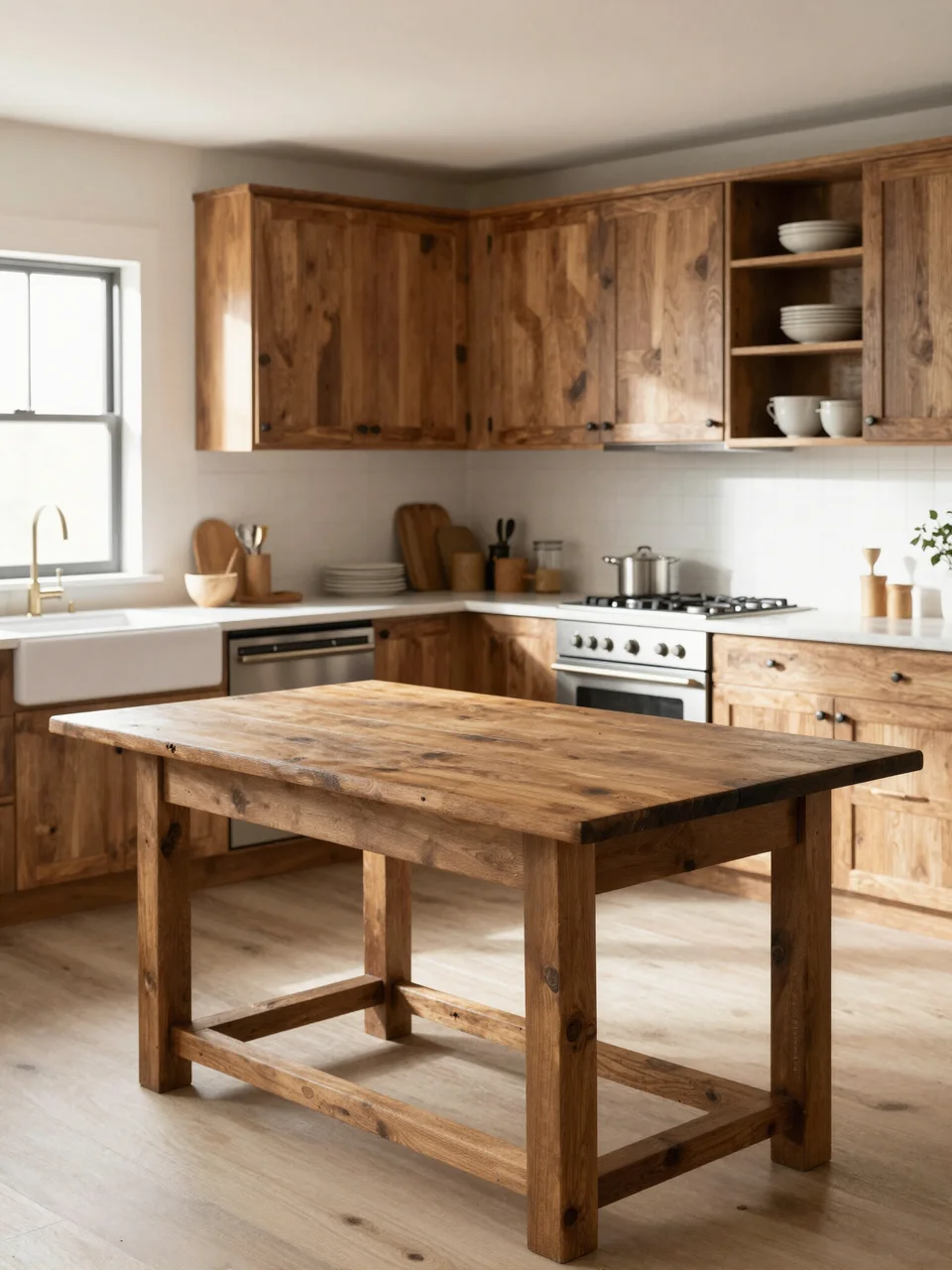
Collected, rather than matching
How to Mix Wood Tones in a Collected Country Home
Bring different wood finishes together by comparing their color, visual weight and placement before replacing furniture you already love.
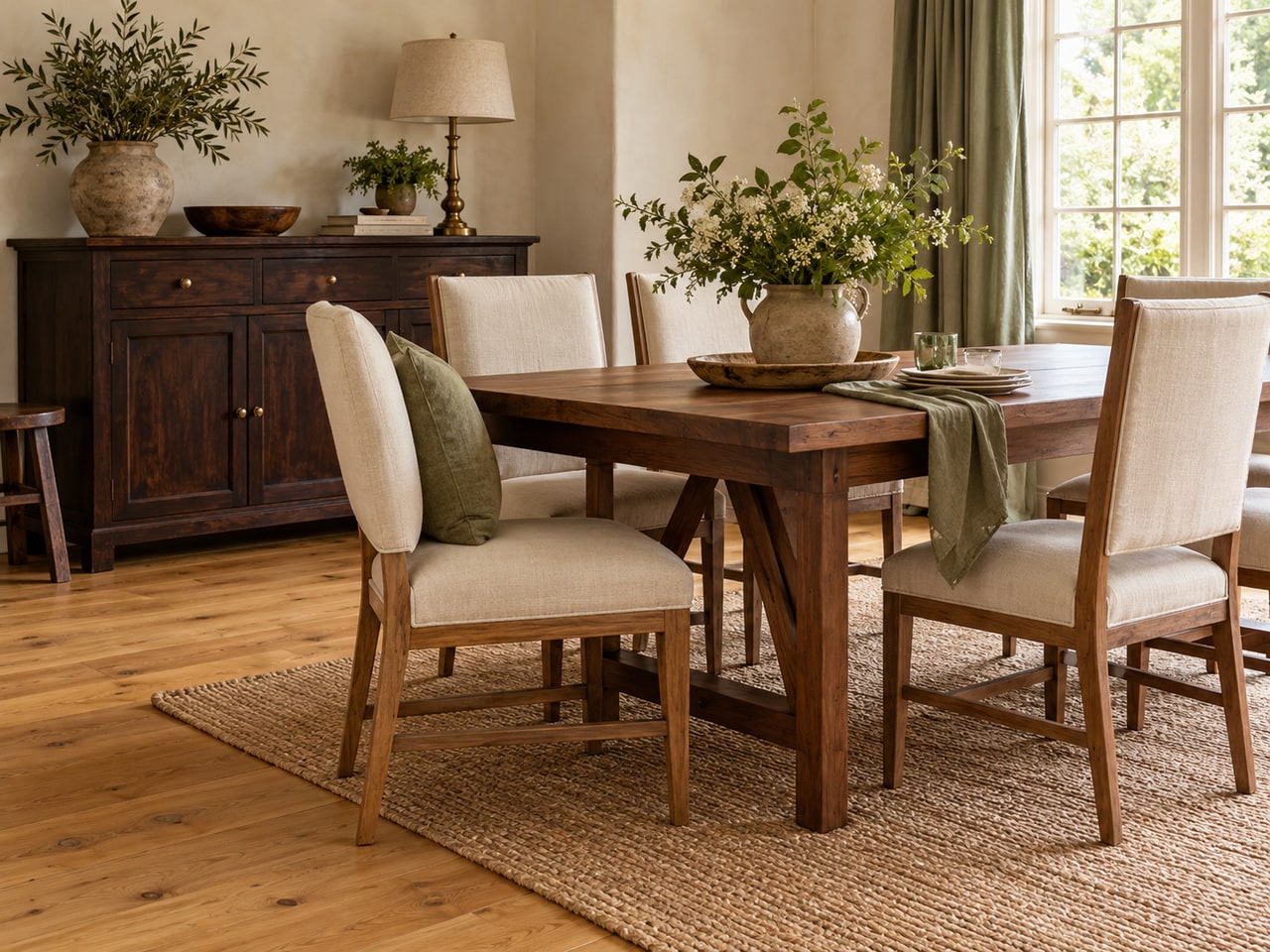
A collected room often includes wood from different times and places: a floor you did not choose, a family table, a newer cabinet and a picture frame. They do not have to become a matching set. A more useful starting point is to notice which finish dominates the room, how the others relate to it, and whether their placement feels deliberate.
Describe the finishes you already have
Write a plain description for each visible wood surface: light honey, medium brown, dark chocolate or gray-brown, for example. Add whether the grain is quiet or prominent and whether the surface looks matte or reflective. You are describing what the room shows, rather than trying to identify a wood species from a photograph.
Include the floor, trim and large built-in pieces. A small side table can seem like the odd piece when the floor is actually setting a strong color direction. Take a photo in daylight and another with your usual lamps on. Use them as a record, while making the final comparison in the room.
Let one large wood surface be the anchor
Choose the finish that already occupies the most visual space, or the piece you most want to keep. It might be the floor, the dining table or a substantial cabinet. Compare the other finishes against that anchor rather than asking every pair of objects to match one another.
For example, with a honey-colored floor and a medium brown table, a darker frame might provide a deliberate accent. That does not require repeating every exact stain. Aim for a clear relationship: an anchor, a supporting finish and perhaps one darker or lighter detail that adds definition.
Compare color separately from lightness
Two pieces can be equally dark but look different in color. One may lean reddish, another yellowish or gray. Put small movable pieces or available finish samples near the anchor and look in the light where they will live. If the difference bothers you there, a product photograph is unlikely to resolve it.
Also compare visual weight. A dark, solid cabinet and a pale open-frame table may balance one another because their shapes differ, even when their finishes contrast. Judge the whole piece, including its legs, proportions and hardware, rather than reducing the decision to a stain name.
Use a textile or painted surface as a bridge
If two wood finishes feel abrupt directly beside each other, try separating them with a rug, a plain runner or a painted piece you already own. An ivory textile can create a pause between a dark table and a warm floor. A patterned fabric may bring together a brown and a muted green already present nearby.
The bridge should still have a purpose. Do not add a rug that obstructs a door or a runner that makes the table harder to use just to soften a color difference. Start with a temporary trial using an existing cloth or sample, then decide whether the relationship feels calmer.
Repeat a finish where the room can use it
One small repeat can make a contrasting finish seem intentional. A dark frame may relate to a dark chair; a woven basket can echo a warmer wood tone without being made from the same material. Look across the room rather than placing all similar pieces together in one corner.
A practical example: if a pale side table feels disconnected from a brown sofa table, try a light frame on the opposite wall before replacing either table. Keep the rest of the shelf quiet. Repetition should help the eye understand the room, not create a reason to buy several unnecessary ornaments.
Rearrange before refinishing or replacing
Move one small piece at a time and compare the room from the normal seating positions. A finish that felt uncomfortable beside a cabinet may work well against a painted wall. Keep the placement that feels settled after a few days, rather than judging only while every object is being moved.
If you later consider refinishing, treat that as a separate project. Check the material, construction and appropriate finishing guidance before changing a surface; a veneer, a factory coating and solid unfinished wood are different starting points. You may find that a new position and a quieter textile were all the room needed.
A little pause before you finish
Before you call it finished
- The floor, trim and large furniture are included in the comparison.
- One finish has a clear role as the visual anchor.
- Color, lightness and furniture shape have been considered separately.
- Any textile bridge remains practical for the room.
- Rearranging has been tried before permanent surface changes.
These are decorating ideas, with illustrative room concepts. This guide contains no paid retailer links. Read our editorial approach.
Back to all journal guides